
단어 설명
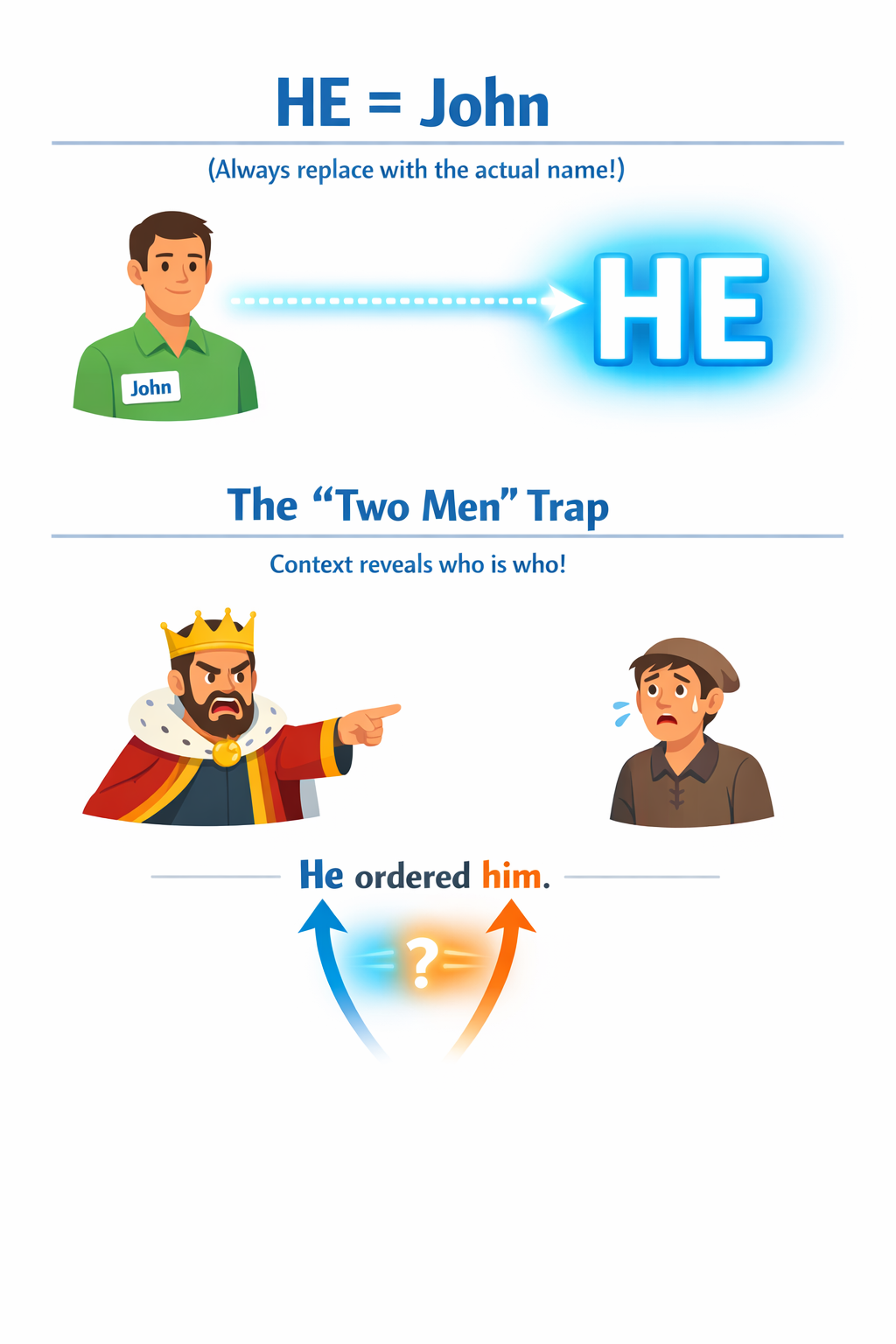
대명사는 영어에서 가장 기본입니다. 그래서 수능에서도 매년 1~2문제씩 꾸준히 출제됩니다. he를 그는이라고 읽지 말고, 문맥에 맞춰 동현이는, Brian은, 그 연구원은처럼 원래 이름이나 명사로 바꿔 읽어야 합니다.
he = 앞에 나온 대상을 다시 가리키는 말
I saw a man in the park. He was playing the guitar...
여기서 He를 그는이라고 읽지 마세요. 머릿속에서는 즉시 앞의 a man을 끌고 와서 그 남자가 기타를 치고 있었구나라고 구체적인 장면이 떠올라야 합니다. he는 앞에 나온 대상을 다시 가리키는 말입니다. 그리고 he가 항상 남자만 가리키는 것도 아닙니다. 앞에 나온 남자뿐 아니라, 수컷 동물처럼 he로 받는 대상도 있습니다.
[수능 핵심] 지문에 남성 인물이 두 명 이상 등장할 때의 he
수능 지칭 추론 문제의 대부분은 이 패턴입니다. 지문에 아버지와 아들, 왕과 신하, 사장과 직원처럼 남성 인물이 두 명 이상 등장합니다.
The father asked his son to clean the room, but he refused.
이때 he는 누구일까요? 모양만 보고는 알 수 없습니다. 문맥상 청소를 거절할 사람은 아들입니다. 수능에서 he를 만났을 때 남성 인물이 둘 이상이라면, 0.001초 멈추고 이 행동을 한 주체가 누구인지 반드시 문맥으로 따져서 원래 이름으로 바꿔 읽어야 합니다.
he said, he argued, he believed, he thought 같은 표현이 나오면, 단순히 그는이라고 읽고 넘어가지 말고 지금 이 말이나 생각의 주체가 앞의 누구인지를 정확히 찾아야 합니다. 수능에서는 누가 행동했는지뿐 아니라 누가 말했고, 누가 주장했고, 누가 믿었는지를 놓치지 않는 것이 중요합니다.
his의 핵심은 인물 정보를 계속 붙잡아 두는 데 있습니다
his는 뒤에 명사가 있느냐 없느냐에 따라 역할이 달라질 수 있습니다. 기준은 간단합니다.
His car is outside. 뒤에 명사가 있음 → 그 남자의 차
This bag is his. 뒤에 명사가 없음 → 이 가방은 그 남자의 것
his research, his dream, his belief, his wife, his students, ... 이런 표현이 나오면 그의라고 하지 말고, 누구의 연구인지, 누구의 꿈인지, 누구의 믿음인지 원래 이름을 다시 넣어서 읽어야 합니다.
그리고, 그 남자의 친구 중 한 명이라고 할 때는 a friend of him이 아니라 a friend of his라고 씁니다. 이 표현은 그 사람 자체가 아니라, 그 사람이 가진 친구들 중 한 명이라는 뜻입니다.
특정한 남자가 아니라 일반적인 한 사람을 가리키는 he
수능에서 he는 늘 앞에 나온 특정 남자를 가리키는 것만은 아닙니다. 문맥에 따라서는 특정 남자가 아니라 사람 일반을 뜻하는 경우도 있습니다. 예를 들어 someone, a person, a child, the consumer, the reader 같은 말이 먼저 나오고, 뒤에서 he나 his가 그 대상을 가리키는 경우가 있습니다. 이때는 앞에 나온 일반적인 한 사람을 다시 가리키는구나라고 이해해야 합니다. 이런 용법은 고전이나 철학 지문에서 자주 보이지만, 꼭 그런 글에서만 나오는 것은 아닙니다.
he or she / his or her / him or her
현대 영어에서는 성별을 한쪽으로 정하지 않고 한 사람을 가리킬 때 he or she, his or her, him or her를 자주 씁니다.
In a pickup game of basketball played among friends, everyone is expected to call his or her own fouls...
여기서 his or her는 특정 남자나 특정 여자를 가리키는 것이 아닙니다. 각자의로 읽어야 합니다.
He or she is drawn into the book.
이 문장도 마찬가지입니다. he or she는 어떤 특정 인물이 아니라 독자 일반을 가리킵니다. 이런 표현이 나오면 남자냐 여자냐를 따질 게 아니라, 성별을 정하지 않은 일반적 단수 인칭 표현이구나라고 생각해야 합니다.
[심층 사고 훈련 : Deep Dive]
Q. 수능 지문을 읽을 때 he를 무작정 그는이라고 읽으면 가장 위험한 순간은 언제인가요?
정답: 지문 속에 남성 인물이 두 명 이상 등장할 때, 그리고 말과 생각과 주장의 주체를 정확히 추적해야 할 때입니다.
해설: 그는이라고 뭉뚱그려 읽으면, 글 중간부터 이 행동을 한 사람이 누구인지, 이 말을 한 사람이 누구인지, 이 생각을 가진 사람이 누구인지가 전부 섞여버립니다. he를 보는 순간 원래 이름으로 치환해서 읽어야 글의 흐름이 유지됩니다.
[1초 스피드 체크 : Speed Check]
▶ 다음 문장들을 읽고, he(his)가 요구하는 정확한 사고의 흐름에 1초 만에 체크해 보세요.
The boss called John into the office because he made a critical error.
Q. 여기서 he를 읽는 올바른 뇌의 스위치는?
[ ] A. 그냥 그는이라고 해석하고 부드럽게 넘어간다.
[ ] B. 사장과 John 중 치명적인 실수를 한 사람이 누구인지 문맥으로 따져본다.
정답: B
해설: 수능 지칭 추론의 전형적인 패턴입니다. 상식적으로 불려간 John이 실수를 한 주체이므로, he 자리에 John을 넣어서 읽어야 완벽한 독해가 됩니다.
His idea was brilliant, but the final decision wasn't his.
Q. 한 문장에 두 번 쓰인 his의 역할 차이는?
[ ] A. 둘 다 명사를 꾸며 주는 역할이다.
[ ] B. 첫 번째는 명사를 꾸미고, 두 번째는 명사 없이 혼자 쓰여 그의 것이라는 뜻이 된다.
정답: B
해설: his는 뒤에 명사가 있는지 없는지에 따라 역할이 달라집니다. 하지만 독해에서는 둘 다 결국 앞에 나온 인물에게 다시 연결해 읽는 것이 핵심입니다.
He looked tired, so I decided not to bother him.
Q. 여기서 him을 새로운 인물로 착각하지 않으려면?
[ ] A. he와 him은 자리만 달라졌을 뿐 같은 대상을 가리킨다는 점을 인식한다.
[ ] B. him은 무조건 다른 사람이라고 외운다.
정답: A
해설: he와 him은 문장 안에서 역할만 달라진 것입니다. 가리키는 대상은 같습니다.
Everyone is expected to call his or her own fouls.
Q. 여기서 his or her를 읽는 가장 좋은 방법은?
[ ] A. 어떤 특정 남자와 여자를 가리킨다고 읽는다.
[ ] B. everyone을 받아서 각자의라고 읽는다.
정답: B
해설: his or her는 성별을 한쪽으로 정하지 않은 일반적 단수 인칭 표현입니다. 특정 인물을 찾는 것이 아니라 everyone과 연결해야 합니다.
He believed that human societies were moving towards more rational forms...
Q. 여기서 He를 읽을 때 가장 중요한 것은?
[ ] A. 그냥 그는이라고 번역하고 내용만 따라간다.
[ ] B. 앞 문맥에서 이 믿음을 가진 사상가나 학자가 누구인지 찾아 그 이름으로 바꿔 읽는다.
정답: B
해설: 수능에서는 he가 단지 인물을 가리키는 데 그치지 않고, 주장과 믿음의 출처를 추적하게 만드는 경우가 많습니다.
이제 위에서 배운 내용을 실전에 적용해 봅시다. 다음 기출 문장들을 읽으며 he나 his를 무작정 그, 그의라고 번역하는 낡은 습관을 버리세요. 단어를 만나는 0.001초의 순간, 이 he가 앞에 나온 누구를 다시 가리키는지, 이 his가 누구의 정보인지를 먼저 확인한 뒤 원래 이름으로 바꾸는 연습을 해야 합니다.
[기출 문장 1: 주인공의 이름표를 끈질기게 추적하는 his]
Max Kleiber, a pioneer in the study of animal biology, was best known for his research on animal nutrition and metabolism. (2026 수능)
사고의 흐름
was best known for his research → 그의 연구로 잘 알려져 있었다
독해 스위치 작동: 여기서 his는 막연한 그의가 아닙니다. 문장 맨 앞에 나온 Max Kleiber의 연구라고 정확히 원래 이름을 넣어서 읽어야 인물 정보가 흩어지지 않습니다.
[기출 문장 2: 성별을 넓게 받는 일반적 단수 인칭 표현]
In a pickup game of basketball played among friends, everyone is expected to call his or her own fouls... (2026 수능)
사고의 흐름
everyone is expected to call his or her own fouls → 모두가 각자의 파울을 선언할 것으로 기대된다
독해 스위치 작동: 앞에 특정 남성이 등장한 것이 아닙니다. his or her는 everyone을 받아 주는 표현이므로 그 사람의라고 읽지 말고 각자의로 읽어야 합니다.
[기출 문장 3: 주장과 믿음의 주체를 추적하는 He]
He believed that human societies were moving towards more rational forms... (2026 수능)
사고의 흐름
He believed that... → 앞에서 나온 그 사상가가 이렇게 믿었다
독해 스위치 작동: 이 문장은 내용만 따라가면 안 됩니다. 앞 문맥에서 누가 이 믿음을 말하고 있는지 찾아야 합니다. He 자리에 그 인물의 이름을 넣고 읽어야, 이 주장과 관점의 출처를 놓치지 않습니다.